
Why Leading Manufacturers Are Choosing Refamix Continuous Mixer for Large-Scale Processing
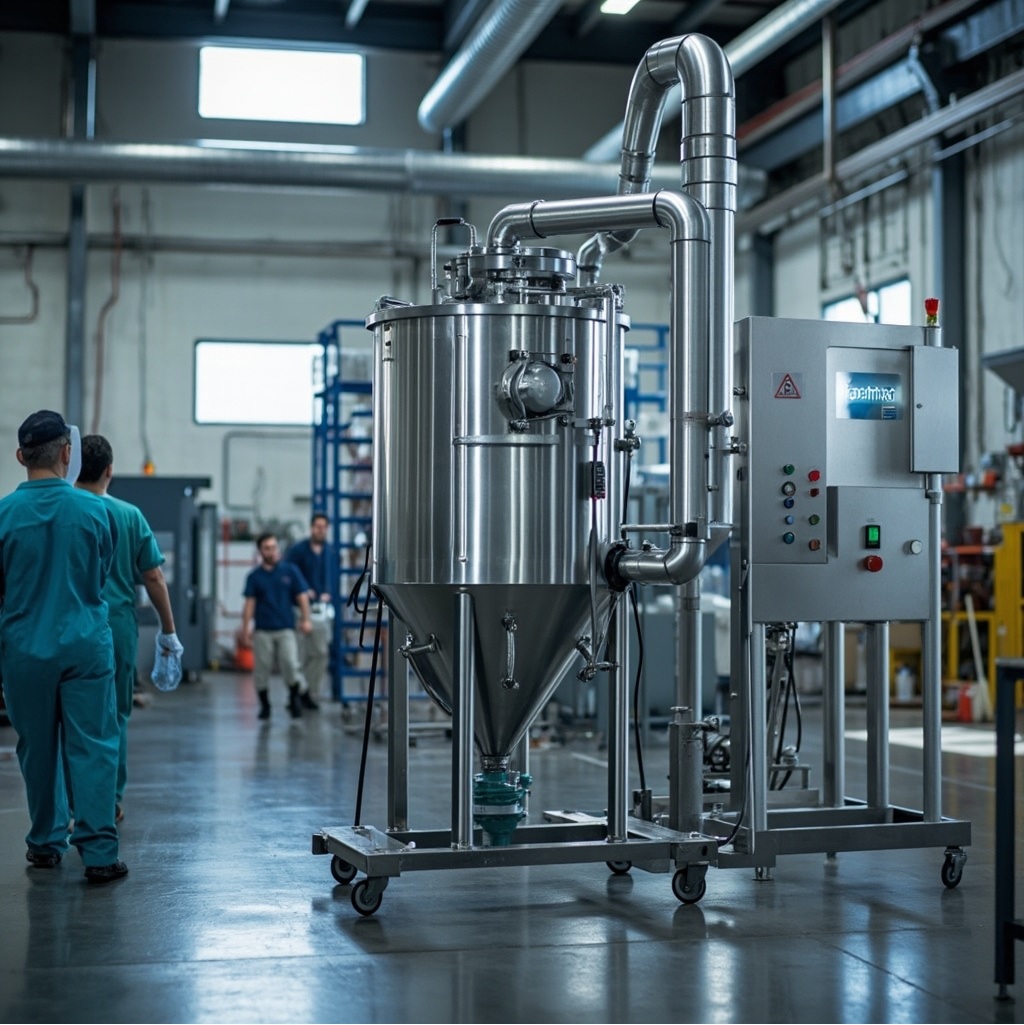 Walk onto any high-volume production floor that’s been running for more than a decade, and you’ll likely see the same bottleneck: batch mixing. The old rhythm of load, mix, dump, clean, repeat has become the silent enemy of throughput. But something shifted in the last two years. A quiet migration is happening, and it’s not about flashy digital dashboards or AI predictions. It’s about a machine that simply refuses to stop. Leading manufacturers are swapping out their legacy batch systems for the Refamix Continuous Mixer, and the reason isn’t just speed—it’s the elimination of the pause.
The core problem with large-scale batch processing is that it’s inherently inefficient by design. Every time you stop to discharge and reload, you lose heat, you lose momentum, and you introduce variability. For manufacturers running 24/7 operations, those micro-stops add up to hours of lost production per week. The Refamix Continuous Mixer attacks this directly. It feeds material in one end and delivers a consistent, homogenous output on the other, without ever hitting the brakes. That single change can boost effective line capacity by 20 to 30 percent without adding a single square foot of floor space.
But here’s where the decision gets interesting. It’s not just about raw volume. The manufacturers making the switch are the ones who realized that consistency is the real profit driver. In batch systems, the first few minutes of mixing are always different from the last few minutes. Temperature gradients, moisture migration, and ingredient segregation create a bell curve of quality that forces companies to over-specify raw materials just to stay within tolerance. The Refamix Continuous Mixer flattens that curve into a straight line. Every gram of output is chemically and physically identical to the gram before it. That means less waste, fewer rejected batches, and the ability to use slightly lower-grade inputs without compromising the final product.
One production manager I spoke with described the transition as “boring in the best way.” Before, his team spent half their shift firefighting inconsistencies. Now, they monitor a steady stream of data and intervene only when something truly unusual happens. The machine handles the rest. That shift from reactive to predictive maintenance is a hidden cost saver that doesn’t show up on the initial ROI spreadsheet but becomes obvious within the first six months of operation.
The engineering behind the Refamix is deceptively simple. Instead of relying on a single massive agitator, it uses a series of interlocking mixing zones that progressively blend materials as they travel along a horizontal barrel. This modular design means you can adjust the mixing intensity for different stages of the process—gentle folding for fragile ingredients, high shear for tough dispersions—all within the same machine. It’s a level of granular control that batch mixers simply cannot replicate without multiple separate units.
There’s also the maintenance angle. Large-scale batch mixers are notorious for seal failures and bearing wear caused by the constant start-stop torque. The Refamix Continuous Mixer operates under steady-state conditions, which dramatically extends the life of wear parts. Manufacturers report seal replacement intervals that are three to four times longer than comparable batch equipment. For operations where a four-hour unplanned shutdown costs more than the machine itself, that reliability is worth its weight in raw material.
Of course, no one switches a production line overnight. The manufacturers who are leading this shift didn’t jump blindly. They ran side-by-side trials, measured energy consumption per ton, tracked downtime minutes, and analyzed particle size distribution across thousands of pounds of material. The data consistently pointed in one direction. The Refamix didn’t just match their batch performance—it exceeded it in nearly every measurable category while using less power per unit of output.
The real takeaway here isn’t that continuous mixing is new. It’s been around for decades in niche applications. What’s changed is that the technology has finally matured to the point where it can handle the brutal demands of large-scale processing without requiring a PhD to operate. The Refamix Continuous Mixer has become the pragmatic choice for manufacturers who are tired of fighting their own equipment. It’s not the sexiest piece of machinery on the floor. But it’s the one that keeps running, keeps producing, and keeps the bottom line exactly where it needs to be.